

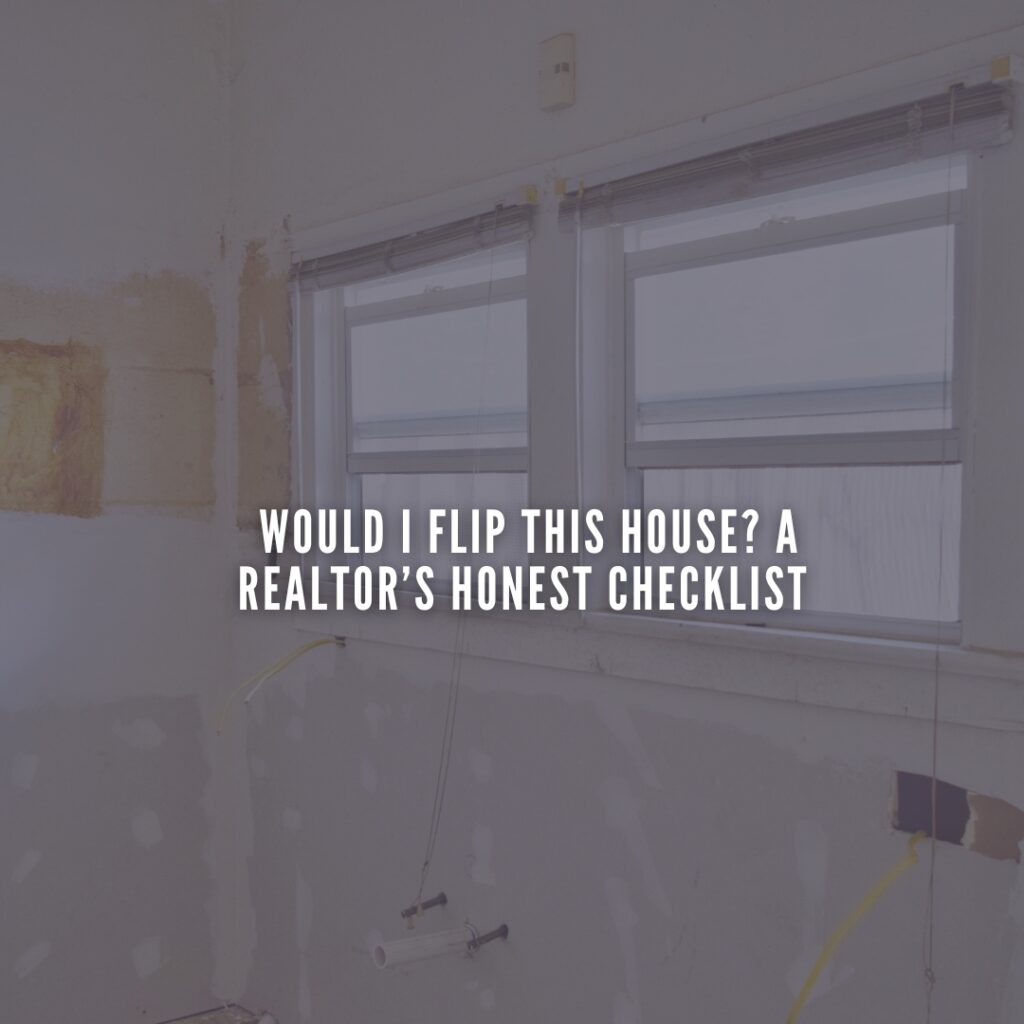
After more than 30 years in the real estate industry—as both a seasoned real estate agent and a property After more than 30 years in the real estate industry—as both a seasoned real estate agent and a property investor—I’ve learned one very important thing:
Not every “fixer” is a good flip.
I’ve walked through hundreds of homes, watched markets rise and fall, seen renovation trends come and go, and experienced firsthand how small decisions can make—or break—a deal. When I look at a potential flip, I’m not just seeing outdated finishes or design potential. I’m evaluating risk, long-term value, buyer behavior, and the numbers behind the pretty pictures.
That experience has shaped a very specific way I evaluate homes.
So when I scroll through listings and ask myself, “Would I flip this house?” it’s not a gut feeling—it’s a checklist built on decades of experience, wins, mistakes, and lessons learned the hard way.
Here’s exactly what I look for, what raises red flags, and what makes me walk away entirely.
First Things First: The Non-Negotiables
Before I even think about renovation ideas, these basics have to work.
1. Location That Does the Heavy Lifting
A good flip starts long before demo day.
- Strong recent sales (comps)
- Homes selling quickly when updated
2. The Price Leaves Room to Breathe
A flip only works if the numbers are conservative.
I’m asking:
- Is the purchase price clearly below market value?
- Is there room for renovations and surprises?
- Will this still make sense if costs run higher than expected?
If the deal only works perfectly, it doesn’t work at all.
The Green Flags: What I Love to See in a Flip
These are the things that immediately make me lean in.
3. Cosmetic Problems (Not Structural Ones)
The safest flips—and often the most profitable—are cosmetic.
- Outdated kitchens and bathrooms
- Old flooring and tired paint
- Dated light fixtures
- Poor staging, clutter, or strong odors
Cosmetic projects come with less risk, but they also attract more competition.
That’s why experienced investors sometimes look where others won’t.
As I like to put it: “I like stinky homes.”
Cigarette smoke. Pet odors. Dead animals. Homes most buyers won’t even walk into.
When a house smells bad, fewer people make offers—which often means better pricing and more negotiating power. Odors can usually be fixed, and when the numbers work, these deals can turn into big wins.
Of course, there’s a risk/reward tradeoff. Projects involving things like mold, termites, or severe odor take more work and careful evaluation—but they can also offer less competition and stronger margins for investors who know what they’re doing.
4. Kitchens & Bathrooms: Where the Money Goes
Kitchens and bathrooms are expensive compared to other rooms. While most spaces can be refreshed with paint, flooring, and light fixtures, kitchens and baths involve cabinetry, plumbing, appliances, and finishes that add up fast.
I always account for this early in the numbers—and I’m careful not to overbuild.
Today’s buyers also expect updates like recessed lighting instead of the old single light in the middle of the ceiling. These details matter, but only when done strategically.
5. A Functional Floor Plan
I want good bones—not a puzzle.
- Logical room flow
- Bedrooms in sensible locations
- Kitchens that don’t require moving plumbing
Moving walls, plumbing, or major mechanicals gets expensive quickly. If the layout fights you at every turn, it’s usually not worth it.
6. Mechanical Systems That Aren’t a Total Wildcard
Older homes are fine. Unknown systems are not.
Green flags include:
- Roof replaced within the last 10–15 years
- HVAC that’s been maintained or partially updated
- Electrical and plumbing that aren’t original to the 1950s
You don’t need everything new—but you do need clarity.
The Red Flags: When I Start Backing Away
These are the things that make me pause—or walk.
7. Foundation or Major Structural Issues
This is a big one.
- Cracks, uneven floors, sloping rooms
- Evidence of water intrusion
- Poor drainage around the home
Foundation work can turn a flip into a financial black hole fast.
8. Layout Problems That Require Big Changes
Some problems are harder to fix than they look.
- Tiny kitchens with no expansion options
- Awkward bedroom-to-bathroom ratios
- Poorly done additions that feel disconnected
If the layout can’t be improved without major construction, the risk usually outweighs the reward.
9. Permit and Zoning Issues
This is where deals get messy.
- Unpermitted additions
- Converted garages or basements without approval
- Zoning restrictions that limit improvements
These issues can delay sales, complicate financing, and scare buyers away.
Design Choices That Actually Sell
I always design with resale in mind.
- Neutral colors appeal to more buyers
- Simple, timeless finishes outperform trendy ones
- Over-customization limits your buyer pool
Flipping isn’t about creating your dream home—it’s about creating something many buyers can see themselves living in.
The Final Question I Always Ask
Before deciding to flip, I ask myself:
Would a buyer happily pay for this home once it’s updated—or will they still hesitate?
Because at the end of the day, flipping isn’t about loving the house. It’s about understanding buyer behavior and what they’re willing to pay for.
My Honest Take on Flipping
Flipping a home can be incredibly rewarding—but it’s not as simple as paint and Instagram-worthy finishes.
The smartest flips:
- Buy right
- Renovate strategically
- Stay neutral
- Plan for the unexpected
If you’ve ever looked at a listing and thought, “Could this be a flip?”—I’m always happy to help you think it through with real-world perspective.